

Prepared for
Lifepoint Health
Prepared by Metrasens for Lifepoint Health
A More Flexible Approach to Contraband and Prohibited-Item Screening Across Lifepoint
Lifepoint runs emergency departments, community hospitals, behavioral health and rehab hospitals, and hundreds of other sites of care. Screening can't be handled the same way at every one of those doors. We put this together because we see a fit between that range and a portable, non-contact screening model.

Nick Kargol
Metrasens
At Metrasens, most of our work is in places where screening has to happen without turning an entrance into a checkpoint. Lifepoint stood out because few networks cover this many kinds of care: a rural ED, a behavioral health joint venture, and an award-winning rehab hospital can all sit in the same market.
I put this page together to share that perspective with your teams. Nothing here is a recommendation about any particular Lifepoint location. It's our view from the outside, meant as a starting point for a conversation.
If any of it is useful, I'd welcome the chance to hear how your teams handle ED entrances, admissions, and visitor access today.
— Nick
Nick Kargol — Metrasens
Why a mixed network is different
From the ED to a rehab gym, screening has to support both safety and the care environment.
Across a community hospital campus, screening isn't only a security interaction. It can happen at a busy ED door at 2 a.m., during a behavioral health admission, at a family visit, or as a patient moves from acute care into rehab. How that interaction is handled shapes the care experience, not just the outcome at the door.
Safety
- Staff and patient safety
- Changing levels of concern
- Consistency across the door
Care experience
- A respectful environment
- Non-confrontational interactions
- A respectful, less confrontational interaction
Neither side outweighs the other—screening decisions sit at the balance point between them.
Non-contact screening
No pat-downs, no hands on the person, no archway to walk through—the interaction stays conversational rather than adversarial.
Flexible deployment
Screening placed where the situation calls for it that day, instead of turning every entrance into a permanent checkpoint.
More informed follow-up
Knowing where on a person something was detected means a shorter, more specific, and more dignified secondary conversation.
What Lifepoint's network means for screening
Lifepoint isn't one kind of facility repeated 400 times. It's an emergency department in a rural community, a behavioral health hospital, a rehab unit, and an outpatient clinic—often in the same market. Screening has to make sense in all of them.
Many of Lifepoint's hospitals are the main source of care in their communities, so their emergency departments see everything that walks in. At the same time, the network keeps adding behavioral health and rehabilitation capacity, including through joint ventures with other health systems. Each of those settings handles entrances and visitors differently.
Each has its own ED entrance, main lobby, and after-hours access, with a layout that was never designed around screening.
Standalone and joint-venture hospitals where the feel of an admission matters as much as the result at the door.
Outpatient centers, managed rehab units, and post-acute sites, many with little or no dedicated security staff.
Including 12,000+ registered nurses. Any approach has to be simple enough to hold up across very different teams, shifts, and state rules.
That points less to one identical checkpoint everywhere and more to one consistent platform your teams could evaluate once, train on once, and then adapt to each hospital's layout and each level of care.
Figures as publicly reported by Lifepoint Health (lifepointhealth.net and the Lifepoint 2024 Impact Report).
What Ultra actually is
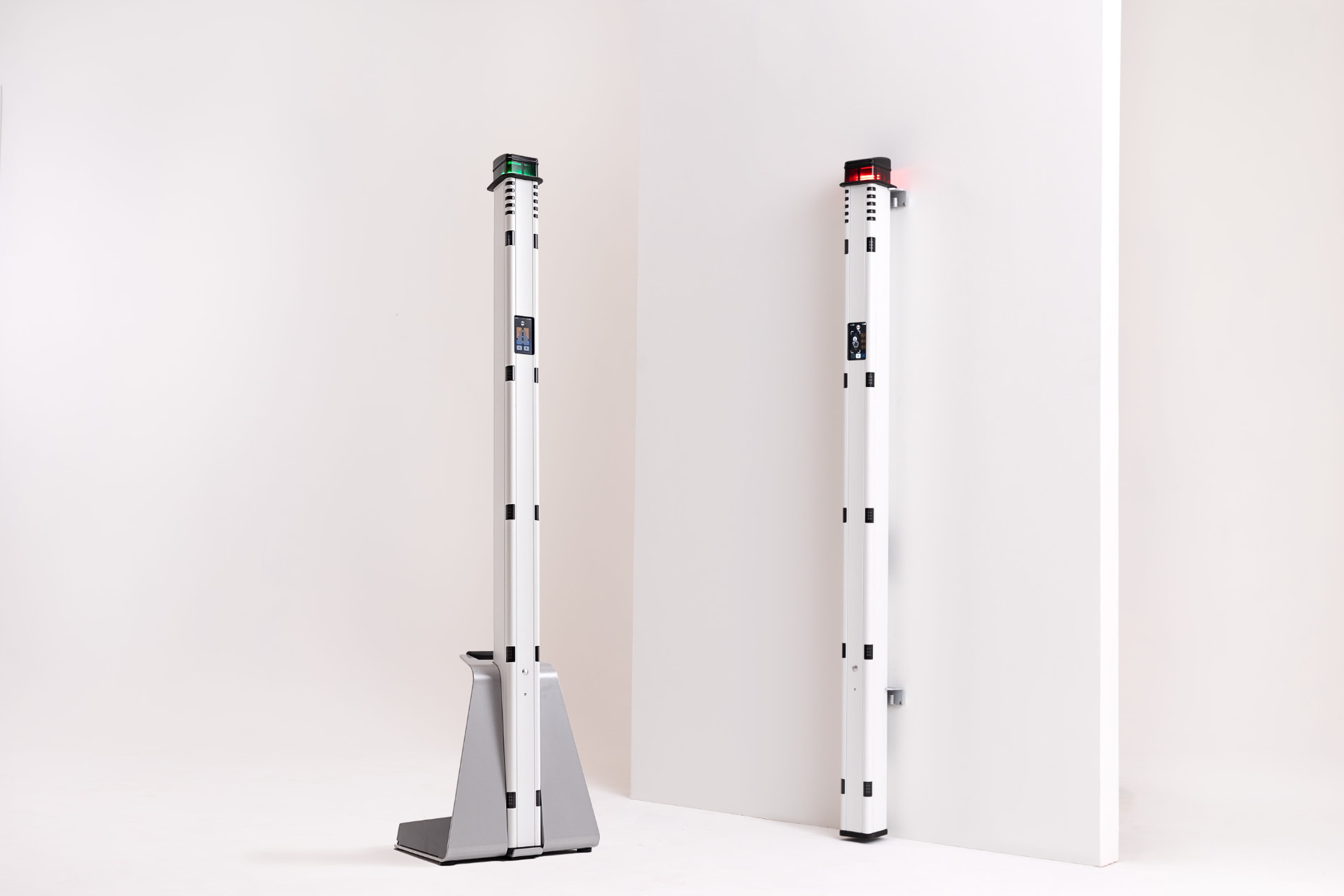
A portable, non-contact screening system for contraband and prohibited items. Not a metal detector. Not an archway.
It stands on its own base, mounts to a wall, or moves with your team. Staff screen head-to-toe from a distance, and five zone indicators show where a detected item is—so follow-up is informed rather than invasive.
Lifepoint's care settings
Where This Could Fit Across Lifepoint
Lifepoint's network runs from community hospital emergency departments to behavioral health hospitals, inpatient rehab, outpatient centers, and post-acute care. Each one has different traffic, different staffing, and different reasons screening comes up. So the useful question isn't whether to screen. It's how one approach adapts across six very different front doors.
Setting 01 of 06
Emergency departments
Open 24/7, often the busiest and least predictable entrance on a community hospital campus.
Traffic pattern
Walk-ins, ambulance arrivals, and companions around the clock, with spikes you can't schedule.
Staffing reality
Security or a greeter at triage in some hospitals; nurses and registration staff in others, especially overnight.
Where Ultra could fit
A freestanding unit at the ED walk-in entrance that screens people as they arrive, without an archway or a queue.
At Lifepoint
Many Lifepoint hospitals are the main or only hospital in their community, so the ED sees the full range of what comes through the door.
Why it matters
ED staff face some of the highest rates of workplace violence in healthcare. Finding items early, without contact, supports staff safety.
What connects all six isn't one identical checkpoint. It's one adaptable platform your teams could learn once, then use differently at the ED, the behavioral unit, or the rehab gym.
Operational fit
Designed to Fit the Environment, Not Redesign It
Adding screening usually means changing a building, a budget cycle, and a staffing model. The premise here is the opposite: a capability that adapts to how a facility already operates—no construction, no new post at every door, and a brief interaction for the person being screened.
Set up in minutes
Freestanding on its base, wall-mounted, or moved between areas—no construction and no permanent checkpoint at every door.
Touchless, head-to-toe
Staff screen from a safe distance with no physical contact, and sensitivity is adjustable for the setting.
Five-zone location
Indicators show which of five zones a detected item is in, so a follow-up check is targeted rather than a full search.
Relevance across leadership
What This Could Mean for Lifepoint's Teams
Operations & facilities
- Flexible deployment across different facility layouts
- An option for existing facilities, renovations, and new construction
- Less dependence on permanent infrastructure at every screening point
- A platform that may be standardized across multiple locations
Quality, safety & clinical
- A non-contact screening experience
- Support for patient, visitor, and staff safety initiatives
- Flexibility to align use with facility policy and clinical judgment
- A screening approach that respects ED, behavioral health, and rehab environments alike
Procurement & system
- One platform with potential applications across hospitals, behavioral, rehab, and outpatient sites
- A consistent equipment approach across 34 states and very different markets
- An opportunity to evaluate implementation, training, and support network-wide
- Flexibility as facilities and operational needs change
Compare notes
Let's Compare This With How Lifepoint Operates Today
This page reflects how we see screening across a network like Lifepoint's, based on what your organization shares publicly and what we see in similar hospitals. The useful next step is putting that view next to how your facilities actually work today.
A few areas we'd be interested in comparing notes on:
- How ED entrances and after-hours access are handled from hospital to hospital, and where practice is already consistent.
- Where a fixed checkpoint makes sense and where it doesn't, across community hospitals of very different sizes.
- How screening needs differ between acute care, behavioral health, rehabilitation, and outpatient settings, including joint ventures.
- How much the feel of a screening interaction matters in the decisions your teams make.
We'd welcome the chance to hear how your teams approach these today, and to build the conversation from there.
Your Metrasens contact
Nick Kargol
Metrasens
- Phone
- +1 331-249-2374
- Calendar
- Find a Time With Nick
Continue the Conversation
[PARDOT HTTPS IFRAME EMBED CODE]
Paste the approved Account Engagement (Pardot) form URL into lifepointConfig.pardot.formUrl. The embed renders full width, responsive, borderless, with an accessible iframe title, and attribution values appended to the HTTPS URL.
Submit button copy: “Continue the Conversation.”
Metrasens uses the information you provide to respond to your inquiry and share related material. See the Metrasens privacy policy for details.